Wow. It has been way too long. Getting kids to college and the Dorian evac kicked my ass. But I’m back in my routine — and just in time as the best season for Bourbon releases is approaching fast. Buffalo Trace just sent out their press release on the Buffalo Antique Collection. You can read it below.
Also, I never let you know who won the ORVW 10 so here is the winner:
We’ll also send out all coupon codes for the Van Winkle 12 Year Drawing Next Week so make sure you check your email.
Finally, I’m planning to pick up Batch 2 of Pappy and other rare bourbons by the middle of October. If you want anything, let me know. Here’s what’s left.
Pappy Van Winkle’s 23 YR – (Stitzel-Weller, 2014 and earlier) – $2500 – 2
Pappy Van Winkle 23 YR – (2015-2018) – $2100 – SOLD OUT
Pappy Van Winkle’s 20 YR – SOLD OUT
Pappy Van Winkle’s 15 YR – 2 – $1200
Van Winkle Special Reserve 12 YR – 4 – $625
Old Rip Van Winkle 10 YR – 4 – $575
Van Winkle Family Reserve Rye – 3 – $1700
Thomas Handy Rye – 4 – $400
Sazerac 18- 3 – $980
George T Stagg – 7 – $750
William LaRue Weller – 2 – $900
Eagle Rare 17 – 4 – $1050
Michter’s 20 – $2000
You can pay by PayPal, Venmo, Zelle or BTC.
- Pappy (and other Rare) Bourbon Events (Includes tasting events categorized by state.)
- Raffles, Auctions, Lotteries, and Contests, Etc. (Overviews all these sources for finding Pappy and other rare Bourbons by state.)
- Pappy Opportunities or Private Listings ( A list of available bottles by private collectors who are willing to offer their excess inventory to others.)
4 Shots:
BUFFALO TRACE DISTILLERY RELEASES HIGHLY
SOUGHT AFTER 2019 ANTIQUE COLLECTION WHISKEYS
FRANKFORT, FRANKLIN COUNTY, KY (Sept. 18 2019) It’s that time of the year – changing leaves, cooler nights and the release of Buffalo Trace Distillery’s annual 2019 Antique Collection of whiskeys. The much anticipated collection will once again feature five limited-release whiskeys of various ages, recipes and proofs. Here’s what fans can expect:
George T. Stagg
The proverbial powerhouse favorite of the Antique Collection, George T. Stagg, comes in at a lower 116.9 proof this year. This is the lowest proof in this whiskey’s history. Master Distiller Harlen Wheatley cites barrels located on the lower warehouse floors as the reason. “Many of the barrels for this year’s Stagg composite were taken from the first floor of the warehouse. The first floor is cooler with higher humidity levels, therefore the alcohol evaporates faster than the water.” The taste, however, is still what Stagg fans can expect, vanilla and toasted oak with a floral undertone, followed by a long finish of cherries, coffee and black pepper.
Past releases of this uncut and unfiltered bourbon have won many top awards, including last year’s release capturing the Chairman’s Trophy at the Ultimate Spirits Competition. This year’s release contains bourbon from barrels filled in the spring of 2004. Storage location of these barrels varied across warehouses C, H, I, K, and Q. The evaporation loss for this year’s batch was 56%, a bit higher than last year’s release.
William Larue Weller
The Antique Collection’s uncut, unfiltered, wheated recipe bourbon is William Larue Weller. Previous editions of this wheater have won many accolades, including receiving 5 Stars – Highest recommendation by F. Paul Pacult’s Spirit Journal. The 2019 offering was distilled in the winter of 2007 and aged in Warehouse I. This bourbon registers in at 128 proof. The bold flavors include toasted vanilla and coffee.
Thomas H. Handy Sazerac Rye
Thomas H. Handy is the uncut and unfiltered straight rye whiskey. Last year’s release earned a double gold medal at the San Francisco World Spirits Competition. This year’s Handy was distilled in the spring of 2013; aged in warehouses K, M, and N, and weighs in at 125.7 proof. The flavor profile includes creamy butterscotch and vanilla.
Eagle Rare 17 Year Old
Last year’s release went back to Eagle Rare’s roots with a proof change from the previous 90 proof back to 101 proof, in tribute to the original strength used when the brand was launched in 1974. The proof remains at 101 this year and will continue forward. The 2018 edition was awarded 92 points at the Ultimate Spirits Competition. This year’s release was distilled in the Spring of 2002 and has been spending its time aging on the first floor of Warehouse P. This bourbon tastes of cocoa, caramel, and oak.
Sazerac Rye 18 Year Old
The previous edition of Sazerac Rye 18 Year Old was named “Best Rye Whiskey Aged 11 Years and Over” by “Jim Murray’s Whisky Bible.” This 2019 straight rye whiskey release has notable flavors of vanilla and maple syrup, with a finish of black pepper and spearmint. The barrels for this whiskey were filled in the spring of 2001 and it rested on the second floor of Warehouses K and L.
The Antique Collection was introduced more than a decade ago and has become a cult favorite among whiskey connoisseurs. Since 2000 these whiskeys have garnered numerous awards from such notable publications as Whisky Advocate Magazine, Spirit Journal, and “Jim Murray’s Whisky Bible.”
The 2019 Antique Collection whiskeys will be available in limited quantities starting in late September or early October. Suggested retail price is $99 each. For more information visit http://www.buffalotracedistillery.com/brands/antique-collection.
Most Valuable Whisky Collection Ever To Be Auctioned At Sotheby’s
The collection’s mysterious U.S.-based owner, known only as “The Ultimate Whisky Collector,” is selling 394 lots, comprising 467 bottles and nine casks. The entire collection is estimated to be worth approximately $4.9 million.
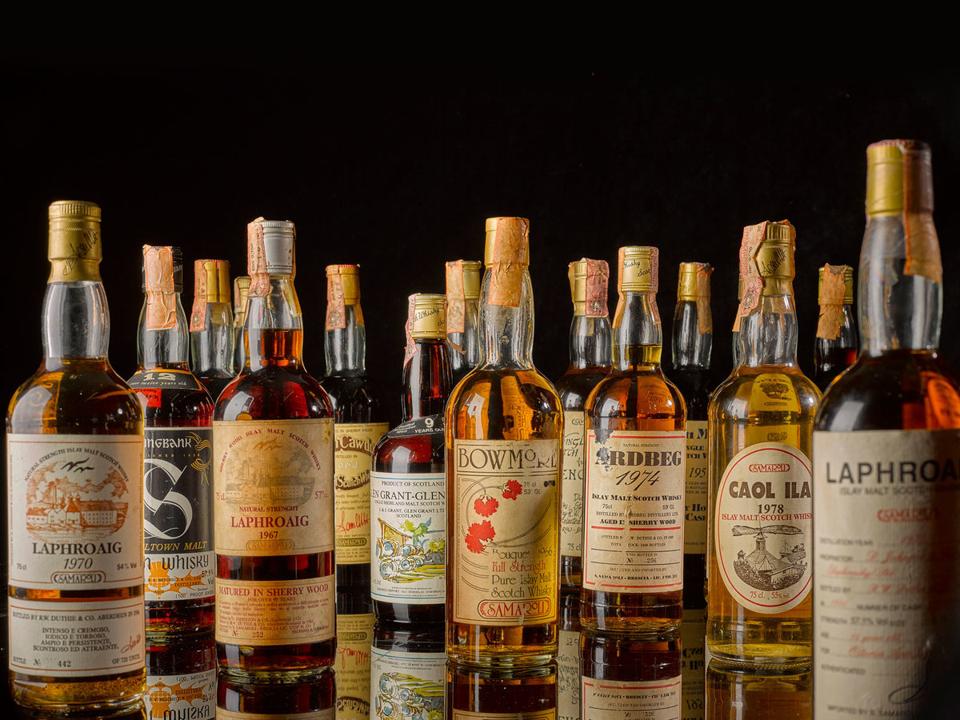
This particular upcoming auction may deserve the superlatives that the news stories have attached to it. Here’s some of the whisky that’s up for grabs.Today In: Lifestyle
The Macallan whisky comprises half the lots, with a total estimated value of $2.7 million. The bottles on offer are a showcase of 70 years of whisky production. They include a 60-year-old Macallan 1926 sourced from the same cask as the bottle that was sold for $1.2 million last year (this particular bottle is estimated at $550,000), two Macallan in Lalique Six Pillars Collections (a series of 6 bottles also estimated at $550,000 for the bunch), a vertical series of 18-year-old Macallans that have been released over decades, and a wall-mounted cabinet designed by craftsman James Laycock holding a collection of 46 Macallan Fine and Rare miniatures from 1937 to 1991, expected to sell for $107,000.
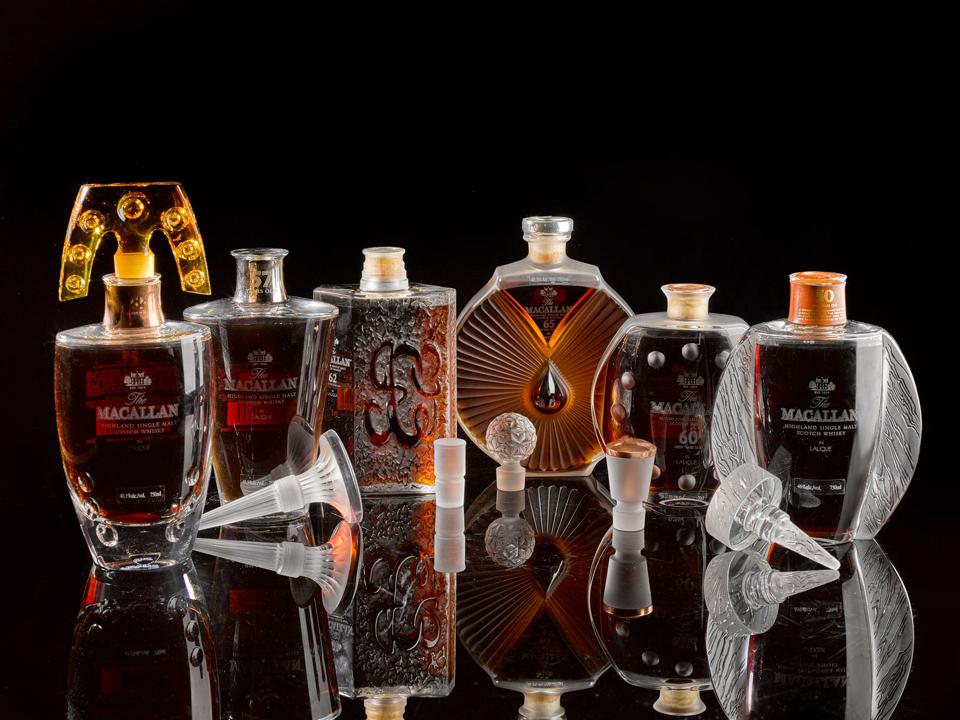
There’s plenty more beyond The Macallans. A vertical of official Port Ellen releases (the Pappy Van Winkle of the Scotch whisky world), the 1st to the 17th editions, will be sold by the bottle. A couple of 70-year-old offerings from Gordon and Macphail, a Mortlach ($25,000) and a Glenlivet ($23,000), are also available. Various releases from Italian bottler Silvano Samaroli, who is treasured amongst collectors, are also likely to hit high into five figures per bottle.
Other aged whiskies include the oldest official bottlings from Glenfiddich (a 64 year old from 1937) and Balvenie (a 50 year old, also from 1937), alongside 50+ old Dalmores and a 50-year-old Highland Park.
The Ultimate Whisky Collector himself had this to say about his selection: “I started this collection and realized that if I really spent time on it and was selective in my choices, I might be able to put together something significant and unique. Two decades on, I think the collection is at that point where it is indeed unique. Having cherished these bottles, I am now ready to share them with collectors around the world.”
The sale will open for online bidding on September 27, and end in a live auction on October 24 at the Olympia event space in West Kensington, London, taking place alongside RM Sotheby’s sale of collectible motor cars on the same day.
Sotheby’s Wine chairman Jamie Ritchie believes that the event is going to make history: “This groundbreaking sale reminds me of the first wine sales that Sotheby’s held in New York in 1994 and Hong Kong in 2009 and we believe it will come to be viewed as a similarly historic moment in the spirits market.
The Best Wheated Bourbon Alternatives to Pappy
Pappy Van Winkle Bourbon fans better get ready.
Cult whiskey Pappy Van Winkle still retains its appeal for bourbon fans, even those who realize that its exorbitant price and scarcity might mean that it’s not really worth the time and expense required to secure a taste. Yes, Pappy is a very good whiskey, especially the 15- and 20-year-old expressions, but is it really worth spending thousands on a bottle, or hundreds for a pour at the bar? It all depends on your means, of course, and for those of us without expense accounts or trust funds, there are some excellent and affordable alternatives to drink instead. Pappy, which is distilled at Buffalo Trace, is a wheated bourbon, which means that wheat is the secondary flavoring grain in the mash bill instead of the more common rye. This generally gives the whiskey a softer, sweeter, fruitier flavor. So for those who have hopped off the Pappy wagon, here are seven alternatives that are just as good, and a whole lot cheaper, to drink now.
Maker’s Mark

The most obvious and popular wheated bourbon choice is Maker’s Mark. This bourbon, owned by mega corporation Beam Suntory, can be found in any liquor store or bar and has a soft, mellow flavor that is accessible even to inexperienced whiskey drinkers. There are only a few different expressions, but one of the best is the Cask Strength, with a relatively low proof ranging from about 108 to 114, depending on the barrel. Maker’s is a solid option to consider in the wheated bourbon category.
WL Weller

Sadly, WL Weller is not as cheap or easy to find as it once was. Blame this on whiskey geeks who discovered that Weller is basically Pappy (made at Buffalo Trace using the same mash bill), but aged for different amounts of time and in different warehouses. This makes Weller probably the closest thing to Pappy you can find, and for that reason it has become another cult whiskey. Antique and Special Reserve are probably easier to find than the 12YO expression these days. There’s also the new Full Proof, which is non-chill filtered and bottled at 114 proof, which is the proof it has going into the barrel. Consider yourself lucky if you can get your hands on any of these at a reasonable price.
Larceny

Heaven Hill’s Larceny Bourbon is a wheater that was first released in 2012, which the distillery says has a “six-year-old taste profile.” In other words, this is a non-age statement bourbon that probably contains whiskey aged between six and ten years. Heaven Hill claims that Larceny has a third more wheat in the mash bill than its competitors, but the actual recipe is not revealed by the distillery. Whatever the case, this is a reliable bourbon that, at 92 proof, can be used to make a good cocktail.
Old Fitzgerald

Old Fitz is another Heaven Hill wheated whiskey, but this one is harder to find (due to limited availability) and more expensive than Larceny. It’s bottled in bond, which means the whiskey is at least four years old and bottled at 100 proof. The most recent edition was a 13-year-old whiskey — each whiskey differs in age throughout the five-year run of this BIB series. The liquid come in fetching decanters, but it’s the whiskey contained within that, up until this point, has been the real selling point.
Wyoming Whiskey Small Batch Bourbon

In the craft sphere, Wyoming Whiskey is making some very good whiskey. The core expression is a wheated bourbon made from a mash bill that includes 20% wheat that shines through on the palate. This is properly aged and expertly distilled craft whiskey, which will likely become better known now that Scottish company Edrington has acquired a minority stake in the distillery.
1792 Sweet Wheat

1792 Bourbon is made at the Barton Distillery, which is owned by Sazerac. There are some interesting expressions included in the brand’s Limited Edition range, including this Sweet Wheat bourbon. As indicated by its name, this is a wheater made with wheat instead of rye, and falls closest to Maker’s in terms of flavor.
Sonoma Bourbon Whiskey

Sonoma County Distilling Co. is a true small-scale craft distillery located in Northern California. The bourbon has a high wheat mash bill of 25%, and it is produced and aged at the distillery. This whiskey is aged for about two years, as is common practice among craft distillers, but the wheat flavor does peek through the woody notes typical of a young whiskey. It begs the question what another three or four years maturation would do to the flavor, but Sonoma is making interesting whiskey that is worth a try even at this young age.
Expert Advice: How to Collect Rare Whiskey on a Budget
BY NICHOLAS MCCLELLAND / SEPTEMBER 18, 2019 12:03 PM
Once upon a very magical time, you could find a bottle of Pappy Van Winkle with staggering ease, The Macallan 18 was merely a modest splurge and only the deeply initiated had even heard of Yamazaki. It was simpler then, easy to build a nice whiskey collection for your drinking enjoyment or sit on it for the future. No, my friends, this isn’t a fairytale, it was the era of vodka and most drinkers were too busy slaying Martinis to notice the bewitching brown spirits on the other side of the bar. Today, however, we are en media res ofthe gilded age of whiskey, where even a mediocre bottling might set you back a tidy sum.
For those of us without unlimited resources, creating a deep and mature whiskey library or investment cache can be a tad tricky. There are more bottlings and expressions than one person can sample without being sent for a long stay at at 12-step program, while the truly special ones are few and far between. What’s a middle-income whiskey fan to do? To answer this question, we went to five of the biggest names in whiskey, from creators and master distillers to brand executives.
Here is their advice on how to build a collection without breaking the bank.
Where to Start
When deciding what to go after, the first question that you have to ask yourself is “am I going to drink my collection?” It is a real dilemma. On one hand, you’ve spent a lot of time and money to assemble a collection, so why consume it? On the other, is it worth that same time and effort just to have a cool decoration and bragging rights? The phrase “bourbon, bourbon everywhere, and not a drop to drink” comes to mind. Personally, I value experiences over possessions, so I would suggest drinking, sharing, and enjoying the bottles that you find. Since bragging rights will be low on your priority list, annual offerings may not be the best use of your dollar – Plus they are harder to find. Instead focus on single barrels, unique expressions, and just good drinking products that you can enjoy! – Caleb Kilburn, Master Distiller for Kentucky Peerless
If you’re looking to invest and make money (on Scotch) start with the big names, the ones that feature heavily on the auction websites. Getting an early is one of the keys. If a distillery is releasing a brand new whiskey, a special edition or a single cask that would be the place to start with a small amount of money. Also another place to look are new distilleries. There’s was a new place on Islay that just opened. So check back in say four to five years time and see what they’re doing. For a personal collection to drink and share with your friends, you want to start with sweet spot ages, 10s and 12s, 18s after that get some big sherry casks, some bourbon casks, get some Speysides, get some Highlands, get some Islands and finish with Islays. Also forget about blends at your peril, there are some phenomenal blends out there. – Brendan McCarron, Head of Maturing Whisky Stocks for Glenmorangie and Ardbeg
I would buy private barrel picks at different stores. These bottles all taste different and are rare but at reasonable prices. I would buy local small distillery products. Not all will last, but the ones that do may be valuable in the future. Also, pick one special release a year instead of buying several different ones. – Eddie Russell , Master Distiller for Wild Turkey
Try Before You Buy
It’s a big commitment buying a full bottle and a great way to find out what you really like and what you don’t is go to a whisky bar and buy small measures of different whiskies. That can help you on your journey. – Brendan McCarron, Head of Maturing Whisky Stocks for Glenmorangie and Ardbeg
Try before you buy when possible. The selections and flights offered at many bourbon bars can help you decide the profiles that suit your palate. Distillery tours that offer tastings of their products is also a great way to survey different products and profiles. – Brent Elliot, Master Distiller for Four Roses
Some of the annual releases can be amazing. I try to visit bars when I can try special releases to see if I think they are worth the price of bottle. – Eddie Russell, Wild Turkey Master Distiller
Know What You Like
The most important thing to know before you collect is what you like. Unless you have the resources to buy everything first and sort through them later, you need to focus on tasting notes and reviews that appeal to your tastes. Brent Elliot, Master Distiller for Four Roses
I would collect the ones I liked because I would be drinking them. Most people do collect a variety of different brands. – Eddie Russell, Master Distiller for Wild Turkey
If you’re out there to make as much dough as you possibly can, you’re in it for a different reason that I am, but focus on the things that are going to make money. If I’m building my whisky library, I’m going to make sure the majority of it is stuff I like but I’m still going to buy things that aren’t necessarily my cup of tea. I’m a big fan of heavily, heavily smoked whiskies, but if I have friends over, they aren’t going to be over the moon that I have smoke, smoke and smoke for them to try. You need a balance.You know what you like, you know where the safe path is for you palate but every now and then its good to jump off left or right. – Brendan McCarron, Head of Maturing Whisky Stocks for Glenmorangie and Ardbeg
If there are brands with bottles that you like that are hard to find but they’re released every year and they don’t change very much, then those are the ones I would be most interested in because they must’ve hit something good here if people talk continuously about it, they do it over and over again, but still had to find. – Campbell Brown, President of Old Forester
Search High and Low
Most of the mom and pop stores don’t get a lot of the special releases because the collectible bottles tend to be highly limited and allocated. The bigger stores will have more stock, so start there. Or, if you have the opportunity, check out the Visitor Centers at your favorite distilleries. Lastly, the stores that are buying private single barrels will have some great whiskies. – Eddie Russell, Master Distiller for Wild Turkey
Most of your large chains are going to be tapped long before you get there or they will be using the bottles in a lottery. I would suggest checking independent bottle shops and developing a relationship with them. – Caleb Kilburn – Master Distiller for Kentucky Peerless
Enthusiasts have been hunting for “Dusties” for years now, so most of those out-of-the way retailers have been picked over of those old, overlooked treasures. I’m sure there are still some opportunities for those rare finds, but it will take some hard work and luck. Fortunately, there are more offerings on the shelves today than any time in recent history, so there is opportunity to collect a wide range of Bourbons from many good distilleries. –Brent Elliot, Master Distiller for Four Roses
There is a value in shopping at both big store and little. If you’re going to have the best collection in town, you have to do the hard work. A lot of things will show up at mop and pops and sometimes you can just buy these kind of diamonds in the rough. But the big shops are fantastic too. They have such a fantastic range. They have really competitive prices and super intelligent staff, as do the mom and pops. So you need to, you need to play the field if you’re startling a whiskey collection. – Brendan McCarron, Head of Maturing Whisky Stocks for Glenmorangie and Ardbeg
Develop a Relationship With Your Retailer
It is very important to form a relationship with your local stores. You will then know when special products are arriving. Retailers want to move product and if they know a collector is hot for a new bottling, then that person is going to be their first call. – Eddie Russell, Master Distiller for Wild Turkey
Many Distilleries offer yearly releases that revolve around the same label and concept. If you find one of these you really like, find the release date and talk to your retailer and see if you can get a bottle. You probably won’t be the only one asking, so it’s important to know your retailer. – Brent Elliot, Master Distiller for Four Roses
If they know you and something new or unusual comes in, they will hold stuff for you and you will get the chance try it. Otherwise you just have to get lucky and walk in on the day they are putting out a one-off that’s going to sell out.– Brendan McCarron, Head of Maturing Whisky Stocks for Glenmorangie and Ardbeg
Travel if You Can
You want to know somebody in Kentucky. Because Kentucky, if you’re a bourbon collector, gets way more than their fair share when you look at the population, and other people are figuring that out. So they’re coming in and they’re collecting half the stuff in town.–Campbell Brown, President of Old Forester
The Kentucky Bourbon Trail is a lot of fun and a great way to learn more about different distilleries and their on-site offerings . You get to sample through a wide variety of expressions at all the distilleries so you can find the ones you like and make more informed buying choices. Plus, a lot of distilleries will offer their latest LTOs at their gift shops making it a great place to find those collectible bottles. And, you’ll often see Master Distillers on these tours so you can ask for a signed bottle. – Eddie Russell, Master Distiller for Wild Turkey
Whiskey tourism is a big thing now, it’s just crazy. The tours are fantastic and there’s lots of whiskies you can only buy at the distilleries. That’s not piss off the world, it’s to reward people for making that journey and give them something they can take back. – Brendan McCarron, Head of Maturing Whisky Stocks for Glenmorangie and Ardbeg
Age Statements Are Important But Not Everything
You can’t be romanced by age statements alone. If you find a style you like, whether it’s a high grain or wheated or what have you, stick with that and find the ones you want. – Campbell Brown, President of Old Forester
I believe they are for the older bourbons. If you are paying a premium for a whiskey, you want to see that age statement. – Eddie Russell, Master Distiller for Wild Turkey
It’s important to know the approximate age of what you are considering. It’s an important clue to the flavor profile, especially if you know what age best suits your palate. Bourbon improves with age, but extra priced and extra aged bourbons aren’t necessarily the best. For anyone’s palate, there is a breaking point for every barrel where the desired qualities begin to diminish with continued ageing. – Brent Elliot, Master Distiller for Four Roses
I would suggest not reading to much into age statements. Age doesn’t always indicate quality. (Ask anyone who has had the equivalent of an oaky ashtray.) Instead focus on acclaim from industry respected reviewers like Fred Minnick, Peggy Noe Stevens, Maggie Kimbrel, Mike Veech, and the list goes on. Also, don’t be afraid to ask a bartender, a shop owner, or a friend. – Caleb Kilburn, Master Distiller for Kentucky Peerless
Before 1930 no whisky had an age statement on it and those bottles are worth way more than a 25 year old whisky that’s out right now. Of course, things today are more likely to become worth more money if it has an age statement on it. But there are some non-age statement whiskies that are outrageously collectable. For the drinker of their collection, it doesn’t matter. If it has an age statement on it, it gives an idea of what it’s going to taste like, just like if it has a description of the cask types, just as it has the strength, just as it has the name of the distillery. It’s a combination of all of these things. Great whisky versus not great whisky is what’s going to determine what I’m going to buy. – Brendan McCarron, Head of Maturing Whisky Stocks for Glenmorangie and Ardbeg
-Cheers, Chris