There are six sources of flavor for whiskey. Each plays a role in the flavor of the final product. I believe in a well-crafted whiskey every source has been done correctly and contributes its fair share to the final product. In the end, I think the flavor of the final product will be dominated by the maturation process but I think its share of the flavor is more like 55-60% than 70% or more, as some claim. The exception to this is whiskeys aged for over 15 years that naturally have more wood flavors from the barrel. – Michael Veach
In case you missed last night’s email, we’re giving away a bottle of Old Rip Van Winkle 10 YR Bourbon on March 27.
Here are the codes:
They will only work one time. If you try to use twice you will get disqualified.
Next week, I’ll send you a link to get 2-for-1 tickets if you want to buy more.
Also, here’s the Pappy Raffle schedule for the next few months.
March – 10 YR
April – 12 YR
May – 15 YR
June – 20 YR
July – 23 YR
All current Basic Members get 10 chances for each drawing for the life of their membership and Premium members get 15.
More Pappy Resources
The Pappy Raffle/Lotteries/Auctions Page (Keeps you in the know about Statewide, Store-Specific or other opportunities to locate a bottle of Pappy.)
The Pappy Events Page (Makes you aware of Tasting Events, Whiskey Festivals, etc. that offer and opportunity to taste some Pappy Van Winkle.)
Also, the Pappy List is now categorized by State. (Bars and restaurants do run out so it’s always a good idea to call and ask if that’s the only reason you’re going.)
4 Shots
The Six Sources Of Flavor In Whiskey
I have heard many people, distillers and consumers alike, state that whiskey gets over 70% of its flavor from the barrel. This is true with real old whiskey. In fact, I have blind tasted twenty-year-old Bourbon against a rye of the same age and the tasters could not tell which whiskey was the Bourbon, and which was the Rye. The wood from the barrel dominated the flavor. However, most whiskeys sold are not nearly that old and I believe there are other factors than the barrel that contribute to the flavor of the whiskey. The younger the whiskey the less the barrel plays a role, at least in a good way. Lincoln Henderson once told me that “You get a lot of flavor from the barrel in the first six weeks of aging. Then you spend the next four years trying to get rid of those flavors.” In other words, the first flavors are harsh and unpleasant but as time works its magic, those flavors break down into more pleasant compounds as the whiskey “mellows” with the aging process. Lincoln also was fond of saying that “You need to get it right every step of the way. If you do not have good new make, then all of the aging in the world will not make it a good whiskey.”

I believe that there are six sources of flavor for the whiskey and maturation is just one of the sources. I base this upon the old Stitzel-Weller “Five Keys to Success” advertisements and added another key, or source of flavor, and that is bottling. Here are the sources of flavor in my opinion:
- Grains: Grains play a huge roll in the flavor of the whiskey. Most people talk about the mash bill and the percentages of grains used and that is an important part of this source of flavor. However distillers are showing the variety of grain used also plays a big role in the flavor. Using heirloom corn, rye and barley does change the flavor. Some distillers are using non-traditional grains such as oats, rice and buckwheat. The grain has an impact in the amount of natural oils and amino acid compounds in the grain. Grain is the first source of flavor.
- Water: Water is essential to the process of making whiskey. It has become less important as many large, city-based distillers, are using water treated with the Reverse Osmosis process to take out chemicals found in the city water supply. However, distillers located away from cities where the groundwater is still pure in deep wells or springs have water that is rich in different minerals that do add to the flavor of the whiskey. It is important to have water without bad flavor components, such as iron. Water may have a small impact on the flavor, but if the water is not good that small impact will ruin your whiskey. Water is the second source of flavor.
- Fermentation: Yeast is an important source of flavor. There are thousands of yeast strains and not all of them make good whiskey. Each strain of yeast creates its own flavors. Four Roses is a good example of this with their five different yeast strains and two different mash bills making ten different whiskeys. However, yeast alone does not create the flavors in fermentation. Bacteria also creates flavors and not all of them good. That is why most distilleries are now using stainless steel mash tubs. Wooden fermenters, even those made from cypress wood which does not have an impact on the flavor of the beer fermenting in them, are hard to keep clean and can lead to bacterial infections of the mash, ruining the fermentation. The length of the fermentation can change the flavor of the beer. Most distilleries do a three day fermentation but some like Old Forester are fermented for five days or even longer. Fermentation is the third source of flavor. The amount of back set, if any, changes the flavor of the beer. Many distillers are using the sweet mash method now with no back set of spent beer.
- Distillation: The type of still being used will have an impact on the whiskey produced. Pot stills, column stills, or a hybrid of a pot with a small column attached all make different flavors. The amount of copper used to make the still will impact the flavor of the whiskey it produces. The proof at which the whiskey is made makes a huge difference in that the closer to pure alcohol (the higher the proof), the less flavor from the grain, water and fermentation in the final product. There is also where the heads and tails cuts are made that can change the flavor of the whiskey. Distillation is the fourth source of flavor.
- Maturation: There are many factors in this process that change flavor. Starting with the barrels. Smaller barrels, those of less than 53 gallons, such as 30 gallons, 10 gallons or even 5 gallons, have thinner staves and less toasting and tend to be producing flavors dominated by the wood tannins alone. The amount of time spent aging the whiskey is also a factor. The longer the whiskey is exposed to the wood, the more the wood dominates the flavor of the whiskey. Where and how the whiskey is stored plays a role in the flavor. How much air circulation around the barrel is an important factor to aging. Palletized barrels lose the impact of the top head which will always be dry. Brick warehouses have less extreme swings in temperature than iron clad warehouses. Warehouses in a city will age whiskey differently than those in the countryside and even those in the country will age differently if they are on a hilltop compared to those in a valley. Heated warehouses age differently than unheated. Whiskey being aged in Michigan will age differently than whiskey aged in Texas as the longer, colder winters up north means either a heated warehouse or a much shorter time of the whiskey being cycled in the wood. The barrel entry proof makes a difference in the final flavor produced in maturation. Lower barrel entry proof allows more natural sugars to come out of the wood at an earlier age since sugar dissolves better in water than in alcohol. It also means the distiller does not need to add as much water when proofing the whiskey for bottling. There are many factors to consider in the aging process and maturation is the fifth source of flavor.
- Bottling: When a distiller bottles a whiskey there are many thing to consider that will impact the flavor of the final product. The first is filtration. Filtration is done to remove bits of charcoal created in the aging process as well as many oils that make the whiskey cloudy when it gets cold. The more the whiskey is filtered, the more flavor that is also removed. This can be a very good thing in super old whiskeys as filtration will remove many bitter tannic flavors and allow the sweeter caramels and vanilla compound to come forward in very old whiskey. However, in younger whiskey filtration can remove flavors and natural oils and make the whiskey thin and watery. The proof the whiskey is bottled at has an impact on the flavor. Generally, higher proof whiskey needs less filtration than lower proof whiskey to keep it from getting cloudy when chilled. The age of the whiskey to be bottled is important. Different ages of whiskey are also used in the bottling of the final flavor profile, creating different flavors for brands from the same whiskey. Bottling is the sixth source of flavor.

There are six sources of flavor for whiskey. Each plays a role in the flavor of the final product. I believe in a well-crafted whiskey every source has been done correctly and contributes its fair share to the final product. In the end, I think the flavor of the final product will be dominated by the maturation process but I think its share of the flavor is more like 55-60% than 70% or more, as some claim. The exception to this is whiskeys aged for over 15 years that naturally have more wood flavors from the barrel.
Control States And Their Influence On Your Whiskey Buying
If you haven’t had the pleasure of trying to buy a spirit such as whiskey in a liquor control state, a few mental images might come to mind. Many tend to think of draconian laws, put forth by mobsters with political influence. Made-Men laughing in poorly lit, smoke filled rooms, with stacks of cash lining the tables. All while a ‘Don Vito Corleone’ type figure eats cannolis while deciding on who gets product, where product goes, and how much it sells for! OK, it’s not quite like “The Godfather,” but control states are confusing, so, let’s clear a few things up.
Why do we have control states?
After the federal government’s failed attempt at nationwide prohibition, most states were more than happy to see government step away from the liquor business, and hand it over to the private sector. However, a handful of states decided to make themselves the main benefactor of all the liquor sales – these states are called control states.
There are two types of control states – those that act as the sole wholesalers (Maine, Vermont, Ohio, West Virginia, Michigan, Iowa, Mississippi, Montana, Wyoming, Oregon); and those that own and operate the liquor stores (Alabama, Idaho, New Hampshire, North Carolina, Pennsylvania, Utah, Virginia).

An Oregon liquor store (image via OLCC)
What could go wrong?
There are 17 control states, all with different rules, but simple goals…. (1) sell liquor, (2) make money! Shockingly, government, booze, and money, are not the best mixture for making good decisions, and some states suffered from the following: poor customer service, higher retail prices, limited selection(s), little supplier support, cross border sales and uneducated and uninterested staff. Control states were expected to run like Fortune 500 companies, and therefore they cut cost, increased margins, and took advantage of the fact that there were no real options for the consumers.
It didn’t take long for residents of some states to cry foul and push for the privatization of the liquor industry. Washington State did so in 2013 after fed-up voters passed Initiative 1183, forcing the state to surrender its monopoly on sales of spirits.
Five years later, this decision has fallen to mixed reviews. Privatization cleared the way for Casco, BevMo, and Total Wine & More to rush into the state and, in many cases, crushing the existing ‘little guys.” Plus, prices went up on average, not down! Brands like Absolut Vodka took an initial average increase of 21% and Crown Royal jumped 18.1%.
While Washington relinquished the management of the liquor industry, letting go of the profit was a bit harder to do. Washington State imposed a 17% fee on retailers and producers, stifling private gains in the process. Alabama is most likely next on the road to privatization, and they should take notice to Washington’s success and pitfalls.
Control Done Right
After the science experiment in Washington State, other control states took notice, got wise and elevated their game. Believe it or not, government, money, and booze can work! Some control states are even thriving, such as New Hampshire.
A shining star of the control state model, New Hampshire offers low prices; no sales tax; huge displays; stunning stores with incredible selections; an easy to use customer web-page; profit transparency and they support good causes! New Hampshire gets it! Taking advantage of the hordes of vacationers on their way to Maine, the New Hampshire Liquor Outlets are an oasis for those into distilled spirits.
New Hampshire also great for small craft brands to compete. In a recent conversation with Ben McHugh – Owner of Stone Fence Beverage, a craft spirits broker for New Hampshire and Maine, I asked Ben how it was working with New Hampshire liquor stores. He told me “to understand how New Hampshire works, the most useful analogy I’ve come across is to think of them as a giant 72 store chain. In fact, if you were to take the state’s yearly GP numbers and compare it to other spirit and wine chains, it would be the 5th largest liquor and wine chain in the county.”
He also says; he loves the New Hampshire system because “in New Hampshire you are typically dealing with one single liquor buyer for the entire state.”
Balance
There’s plenty of success within control states. Maine, for instance, has found balance in their system. Maine’s wholesale arm, “Maine Spirits,” is a terrific partner to Maine’s ‘Privately Owned’ retail stores; showing how state and the private sector can achieve harmonious growth together.
The fact is that no “one system” is better than the other Open or control, it’s what you make of it! Success seems to be about listening to the consumer, adapting, innovating, and evolving.
Frazier History Museum Selling Vintage Prohibition Era Medicinal Bourbon & Rye Whiskies
The Frazier History Museum on Whiskey Row in Louisville, Kentucky is like the Leatherman you keep in that leather sheath that’s strapped to your belt. Yes, the Frazier History Museum is a museum but it offers so much once you open it up and get to know it. As of August 2018, the museum became the home to the official starting point of the Kentucky Bourbon Trail and The Spirit of Kentucky exhibition. Now when someone asks, “Where does the Kentucky Bourbon Trail start?” there’s a definitive answer. It was around that same time that the museum received its license to sell bottles of Kentucky’s finest bourbon and rye spirits in its gift shop and serve alcohol in its Speakeasy and Order of the Writ bar.
Sales of Vintage Spirits Now Legal in Kentucky
Thanks to their license to sell alcohol and a change in Kentucky law the museum can also sell vintage spirits. A vintage distilled spirit, sometimes known as a dusty bottle, is a distilled spirit that remains in its original manufacturer’s unopened container(s), that is not owned by a distillery, and that is not otherwise available for purchase from a licensed wholesaler within the Commonwealth of Kentucky.
In 2017 the Kentucky legislature took a major step toward modernizing the alcohol beverage industry. HB 100, sponsored by Rep. Chad McCoy of Bardstown, allows the private purchase and sale of vintage and rare spirits back on the marketplace. If an individual discovers a rare or well-aged bottle of bourbon from a long-defunct distiller, possibly left over from a prior generation, that bottle — if unopened and still sealed — can now be brought to the retail market.
The market for vintage spirits has boomed in the past decade, with collectors, aficionados, and bar owners clamoring for more rare and unusual products. A prospective buyer can use clues to determine whether or not a product is really vintage. Here are a few things to look for when trying to identify vintage spirits.
- If the label says “IRS” instead of “ATF,” then it predates 1979
- If there is a tax stamp on the bottle or a tax seal over its closure it suggests that it predates the Tax Reform Act of 1984, which ended the tax strip
If the bottle’s top is still sealed but the liquid level has dropped a few fingers, that’s to be expected: corks and screw caps are imperfect barriers against evaporation. However, once a whiskey is bottled, it doesn’t age — nor degrade, generally — so its quality should remain unaffected.
Frazier History Museum Offers Three Vintage Prohibition Era Spirits
The Frazier Museum is now offering a limited selection of rare, vintage whiskeys in its museum store. Spanning three different brands — with more brands to follow — the first products in stock were all bottled during Prohibition and authorized for medicinal purposes only.
Old Hickory Fine Old Eastern Rye Whiskey
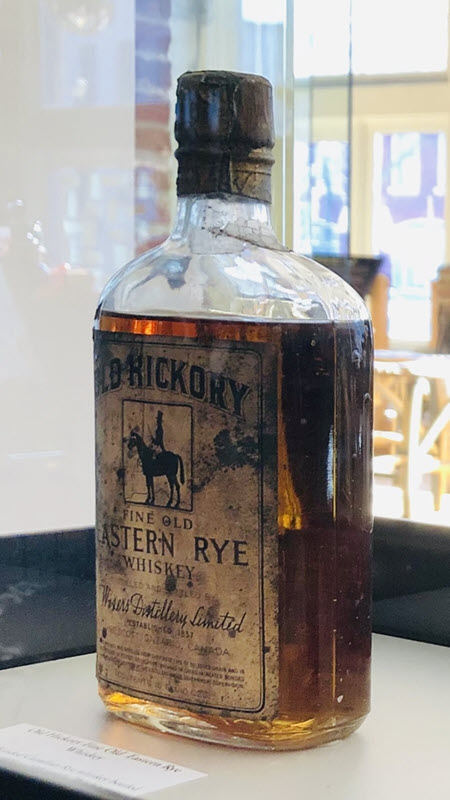
- 1 pint of rye whiskey, bottled in bond, 100 proof (50% ABV)
- Distilled by Wiser’s Distillery Limited
- Bottled in 1925 by Wiser’s Distiller Limited
- Wiser’s Distillery Limited (1857 – 1924); Canadian Industrial Alcohol Co. (c. 1924). Prescott, Ontario, Canada
- Retail Price: $1,500
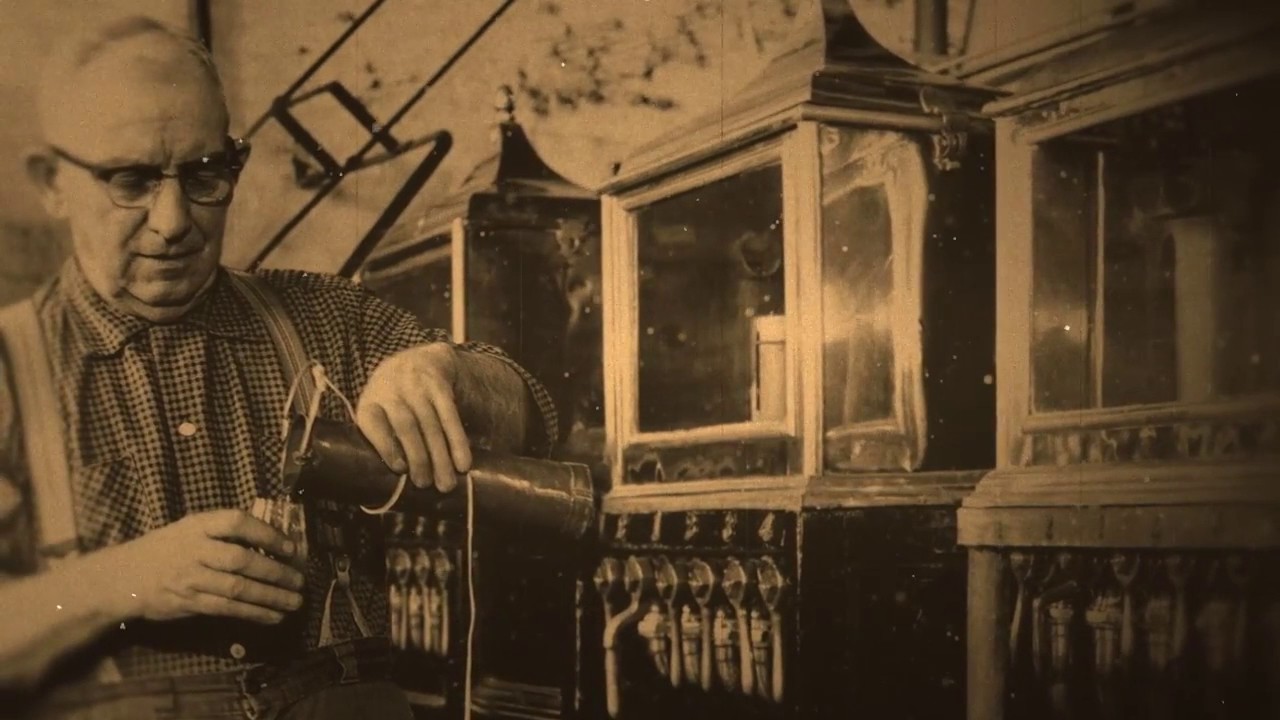
- J.P. Wiser’s Whisky A History of Canadian Whisky.
The product of perfect distillation, this whiskey was distilled from the finest type of selected grain, matured in casks in heated bonded warehouses, and bottled at the distillery under government supervision. The bottle’s markings indicate that it was wax-dipped in Montreal and sealed in Ottawa.
Established in 1857 in Prescott, Ontario, JP Wiser’s Distillery Limited was acquired by the Canadian Industrial Alcohol Company in 1924. This parent organization moved the distillery’s operations to Corbyville, Ontario.
Old Jim Gore Bourbon Whisky – 1912
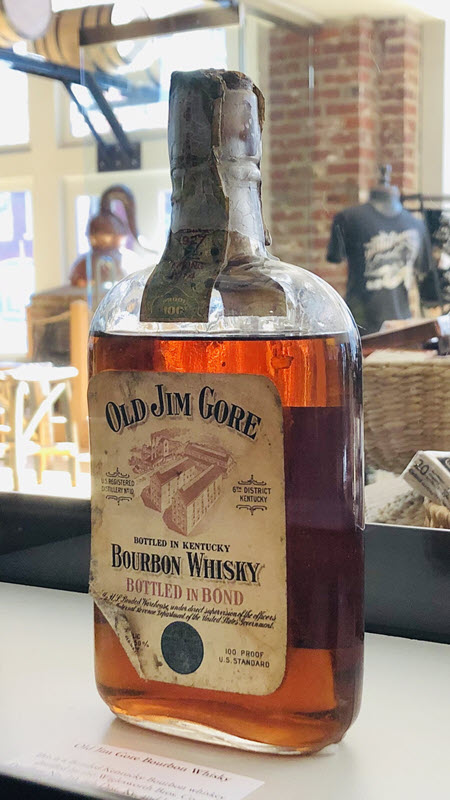
- 1 pint of Kentucky bourbon whiskey, Bottled in Bond, 100 proof (50% ABV), aged 13 years
- Distilled in Spring 19121 by Wiglesworth Bros.
- Bottled in Fall 19251 by James E. Pepper & Co.
- Retail Price: $2,000
Named after one of its Chicago-based proprietors [Chapin & Gore] and advertised as the “Best in the World,” this old-fashioned sour mash bourbon has a rare mellow flavor.
John Poindexter Old Bourbon – 1916
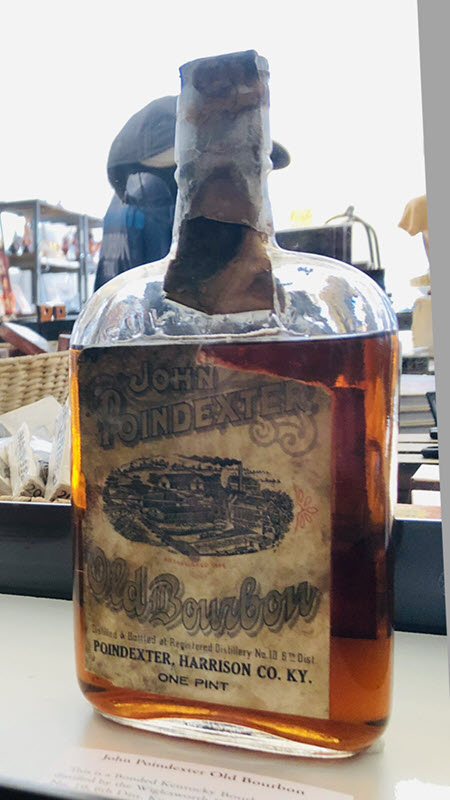
- 1 pint of Kentucky bourbon (100 proof), aged 12 years, bottled in bond
- Distilled in Spring 19162 by Wiglesworth Bros.
- Bottled in Spring 19282 by Joseph Wolf
- 6th Dist., RD #10, Wiglesworth Bros. Co. (1869 – 1919). Harrison County, Kentucky
- Retail Price: $2,000
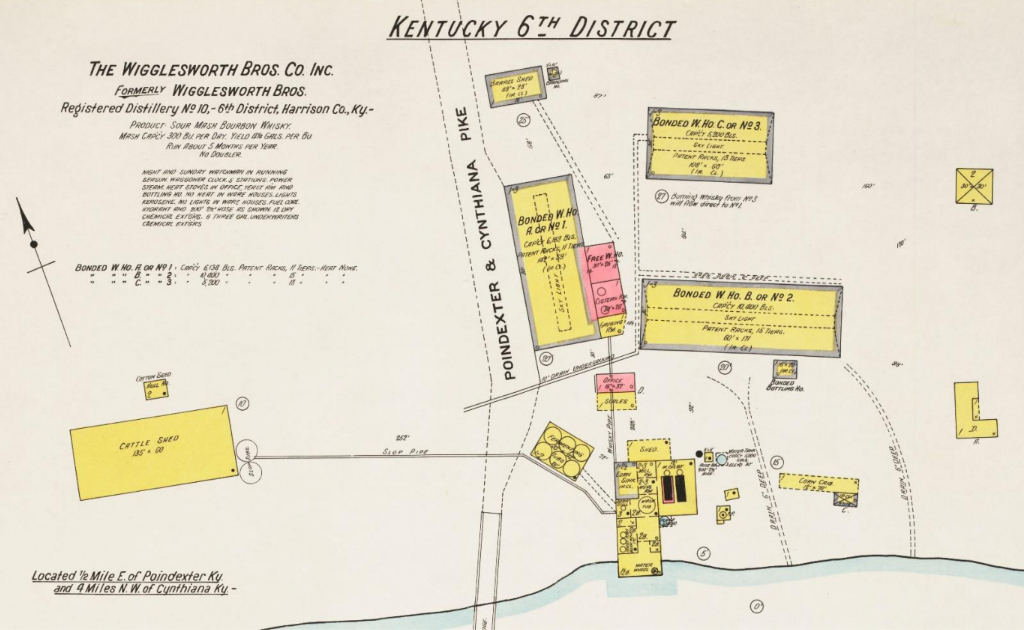
- The Wigglesworth Bros. Co. Inc. Distillery
Introduced by John Poindexter in the 1850s and later acquired by the Wiglesworth Bros. Co., this brand of sour mash bourbon remained in production until Prohibition. Located on the South Fork of the Licking River four miles northwest of Cynthiana, this distillery was built in 1856 by John Poindexter. In 1869 the Wiglesworth family acquired it, tore it down and rebuilt it. By 1910 the mashing capacity had been increased to 300 bushels per day, and there were three bonded warehouses with a storage capacity for 20,000 barrels. In the late 1910s the officers were J. M. Wiglesworth, president and W. T. Wiglesworth, secretary-treasurer. Products included Old G. W. Taylor, Poindexter Bourbon, and Wiglesworth Bros. Sweet Mash. The distillery closed at Prohibition.
In 1924 all the whiskey in storage was transferred to the concentration warehouses of James E. Pepper & Co., a facility in Lexington that had been leased in 1907 for 20 years by Joseph Wolf of Chicago, where it was bottled for medicinal spirits.
View all Kentucky Distilleries.
Endnotes
- Dates vary for one of the Old Jim Gore bottles: it was distilled spring 1914 and bottled spring 1927.
- Dates vary for one of the John Poindexter bottles: it was distilled spring 1914 and bottled spring 1926.
Sources
- Advertisement for Old Jim Gore. LIFE, 25 Oct. 1954, p. 43.
- Advertisement for Old Jim Gore. LIFE, 13 Dec. 1954, p. 85.
- Sanborn Map Co. Sanborn’s Surveys of the Distilleries and Warehouses of Kentucky and Tennessee, Sheet 57. New York, 1910.
- Wallace, W. Stewart. The Encyclopedia of Canada, Vol. II, pp. 214–216. Toronto. University Associates of Canada, 1948.
- Zoeller, Chester. Bourbon in Kentucky: a History of Distilleries in Kentucky, pp. 180–181; 203–204. Butler Books, 2015.
- Source: Sanborn Map – 1910
Could this be the largest-ever spirits-only auction?
In the past few years, Chicago’s Hart Davis Hart Wine has emerged as the nation’s biggest auction house for Bordeaux and Burgundy and the best cabernets made in California. Now the firm is staking a claim as the premier venue for selling expensive Scotch, bourbon and cognac at auction, too.
Over two full days, March 14 and 15, Hart Davis Hart will be presenting its first spirits-only sale, with nearly 1,700 lots offered for live bidding on the internet forecast to gross upward of $1.6 million. The rarities will range from an 1893 French Armagnac to a 60-year-old Macallan Scotch expected to fetch as much as $60,000 for a single bottle. From Kentucky, a single bottle of the Pappy Van Winkle’s 23-year-old Family Reserve bourbon that sold for around $100 at retail when it was bottled in 1998 is expected to attract bids as high as $7,500.
The collecting of fine spirits has become a fast-growing business. When it was founded in 2004, Hart Davis Hart peddled a few fine cognacs at the end of its wine auctions as a favor to its wine consignors, but in the past decade has steadily added more spirits to its catalogs amid rising demand. Until now, however, no other major auction house—a small fraternity that includes Christie’s and Sotheby’s in New York and London—has staged such a large event devoted just to spirits.
“Spirits can get lost in a wine sale,” says Marc Smoler, vice president of client services at Hart Davis Hart. “We hope to create better focus and attention on the category by offering nothing but spirits at one big sale. This will bring major collectors out of the woodwork.”
The experiment with spirits has caught rivals by surprise. “I’ve never seen a major auction house in the U.S. do something like this before,” says Simon Lambert, longtime general manager of Chicago Wine, an auction firm based in suburban Wood Dale. “We rarely handle spirits at all ourselves. Just the odd cognac here and there.”
Most collectors of spirits are a different breed from wine shoppers, often younger with more limited budgets. Whereas wine buyers are looking to buy 12-bottle cases at a time, the spirits buyer often is happy to settle for a bottle or two. The spirits shopper is also detail-oriented, willing to pore over the fine print on whiskey labels looking for arcane information about the wooden casks and warehouses in which the liquid was aged. Wine commonly carries vintage dates, but spirits usually don’t.
“Collectors often have to look closely at the labels on the back of the bottle to find the date of distillation and bottling, and they look at the tax stamps, too,” says Allan Frischman, the spirits specialist at Hart Davis Hart.
Tastes are changing, Frischman says. Japanese whiskies are much sought-after at the moment, with the upcoming sale offering such prized labels as a 1977 Karuizawa single malt that was bottled in 2010 at a sinus-clearing 121 proof. There were only 190 bottles produced, with the auction specimen forecast to draw a high bid of $5,500.
Once considered a plebeian alternative to bourbon, even rye now has its well-heeled fans, with a 1983 Rathskeller distilled at 140 proof made for the Seelbach Hotel in Louisville, Ky., expected to draw as much as $8,500 per bottle. There are also whiskies from Sweden, Taiwan and India. The catalog includes a 26-year-old Midleton Irish whiskey (as much as $950), a 21-year-old Caroni rum from Trinidad ($320) and a Remy Martin Louis III Champagne cognac in a Baccarat crystal decanter ($15,000).
More and more, the buying and selling of fine wines at auction is looking like the stock market, with buyers landing a prize, holding it for a couple of years and then flipping it at yet another auction for a profit. So far, that psychology hasn’t taken hold in the world of whiskey. “The vast majority of our clients bidding on spirits do it out of passion for what is a hobby,” says Frischman.
Cheers!
-Chris Brantley